Leonidas Created the West
...

I
The question at the core of history is: what caused the rise of the West? Powered primarily by advances in European civilization, humanity rose up from millennia of grim subsistence farming to a world of refrigerators, pocket supercomputers, and transcontinental flight. Humans discovered physics, computers, antibiotics, industrial automation, and a vast range of other technologies that, two centuries earlier, would have been indistinguishable from magic. So what was the engine that drove the ascent of the West? Let’s start by explaining what factors cannot explain it.
Judeo-Christianity. Many people reach for religion as their initial explanation for the rise of the West, and the impact of Christianity on European culture cannot be overstated. Vast swaths of Western art and culture refer to Christian teachings, proving that many of the most impactful thinkers were deeply influenced by the religion. Christianity created a basis for mutual cooperation that found expression in concrete institutions: hospitals, orphanages, almshouses, and universities, all of which were Christian inventions, conspicuously absent from the otherwise glittering civilizations of Han China, Gupta India, and imperial Rome.
The most obvious evidence against the theory that Christianity propelled Western civilization is simply that the latter preceded the former. Greece was not Christian, and Rome only became Christian after a long process of conversion. But this objection could be handled by focusing only on the last 500 years, where the most dramatic advances have been observed.
More compelling evidence against the theory is the fact that Christianity often slowed progress by fixating on religious dogma, as the infamous trial of Galileo illustrated. Christian theocracy was generally more restrictive than Roman religion, which had been famously syncretic, content to absorb new gods from every conquered province and rarely concerned with what its citizens privately believed. Christianity invented the novel crimes of heresy, blasphemy, and witchcraft, as well as gruesome punishments for those accused of them. Furthermore, the constant violence and conflict of European history, much of which was religiously motivated, suggests that Westerners did not internalize Christian teachings as much as they advertised in public.
Science & Technology One could argue that the key innovation in Western thought was caused by the development of early science. Science requires a unique mindset of creativity guided by systematic investigation. Francis Bacon, an early philosopher of science, emphasized the importance of testing ideas against reality. Perhaps once this mindset was discovered, it unlocked the potential for innovation and progress in many other fields of human endeavor, such as politics and culture.
It would be wrong to dismiss this viewpoint immediately due to timing issues. Scientific progress did not take off until the 1500s, so to take this theory seriously, we must regard the Greek and Roman eras as merely typical examples of human civilization. Given that there were many other flowerings of civilization in other parts of the world, this is not wildly off-base.
The problem, rather, is that there is clear evidence of Western intellectual ambition before the advent of science. The Renaissance, in particular, produced a spectacular range of artistic and cultural works, but could not have been caused by the discovery of science. It is hard to accept that artists like Michelangelo and Leonardo were not part of the story of Western achievement.
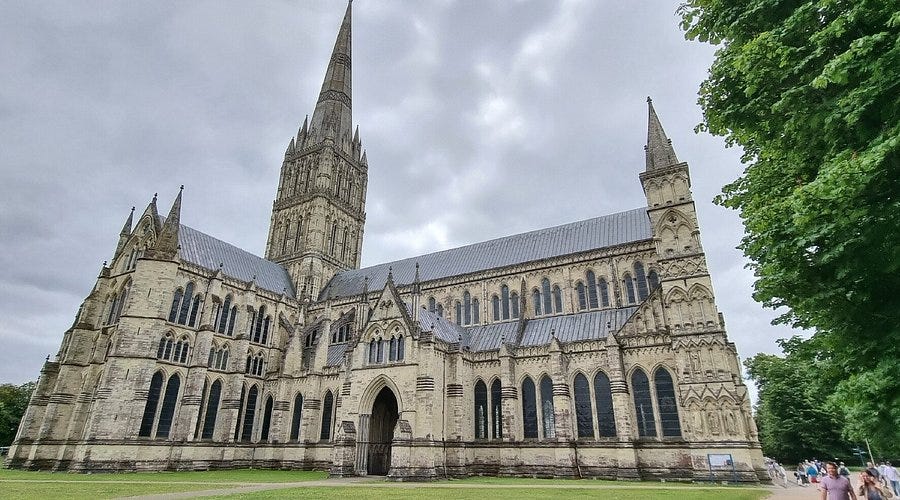
Close observers can find evidence of Western aspiration to greatness even before the Renaissance. The most spectacular manifestations of this ambition are the cathedrals. These works represent grandly ambitious undertakings that required talent in engineering, masonry, and decorative art. They also stand as demonstrations of civic organization and financing.
Enlightenment and Democracy Many people point to Enlightenment ideals as the core engine of Western civilization. If democracy is included as a component of this package, then it is possible to view this tradition as extending back to Athenian democracy and the Roman Republic. But this hypothesis is easily countered by pointing to the vast significance and achievement of monarchies and religious leadership in the West. The oldest scientific academy in the world is the Royal Society, which was granted a charter by Charles II, king of England. The great scientific breakthroughs of Newton, Galileo, Bacon, Kepler, and Descartes were all achieved under the auspices of kings, queens, popes, and Holy Roman Emperors, without a single parliament among them.
Capitalism Capitalism, trade, and finance have played an important role in Western development, with roots going back all the way to Athens’ trade-based naval empire. The merchant princes in Italian cities like Florence and Venice helped to launch the Renaissance by patronizing important artists. Capitalism was a precondition for the industrial revolution, because it gave inventors and innovators the potential to profit from their ideas. The development of railroads depended on a well-developed banking system that could pool the savings of thousands of investors into the enormous sums required to lay thousands of miles of track.
The main problem with viewing capitalism as the engine of Western growth is that many other civilizations developed pieces of it. As early as 1100 AD, the Song dynasty of China had developed long-distance trade networks, paper money, sophisticated credit instruments, and bustling urban markets in cities like Kaifeng and Hangzhou. Similarly, the Mughal Empire in India developed major textile industries that sold goods to far-off cities, along with a network of banking houses that issued bills of exchange (hundis) across the subcontinent. Thus, capitalism falls short as an explanation for the rise of the West, since proto-capitalist activity was well-developed in many other regions which did not see exceptional developments.
Genetics A final contender theory for explaining the rise of the West, particularly popular among the political Right, is that European populations enjoyed some kind of genetic advantage. Discussion of this possibility was suppressed by the Left for many years, with scientists like Stephen Jay Gould arguing that humans have been evolutionarily static for millennia. A recent paper in Nature by David Reich’s lab at Harvard indicates that natural selection has actually accelerated in recent human history.
The main issue with the genetic explanation is that, even with evidence of recent evolution, the period of European ascent is extremely brief compared to evolutionary timescales. 1000 years ago, civilization was at roughly the same level in Europe as in China, India, and the Middle East. It is hard to see how a genetic advantage would appear and then produce such dramatic results in a timeframe that is so short by the standards of evolution.
Some observers point to IQ differences between Europeans and nearby ethnicities in the Middle East and India. Even if we postulate a modest European intelligence advantage, it is hard to see how a small boost could cause such an enormous differential in rates of advancement. But more damningly for the genetics theory, East Asians actually have higher IQ than Europeans, but have lagged significantly behind in development over the last 500 years.
II
If all these explanations fall short, what is the actual answer? The first clue to unraveling the puzzle is to look at a map of the birthplace of Western civilization: Greece.
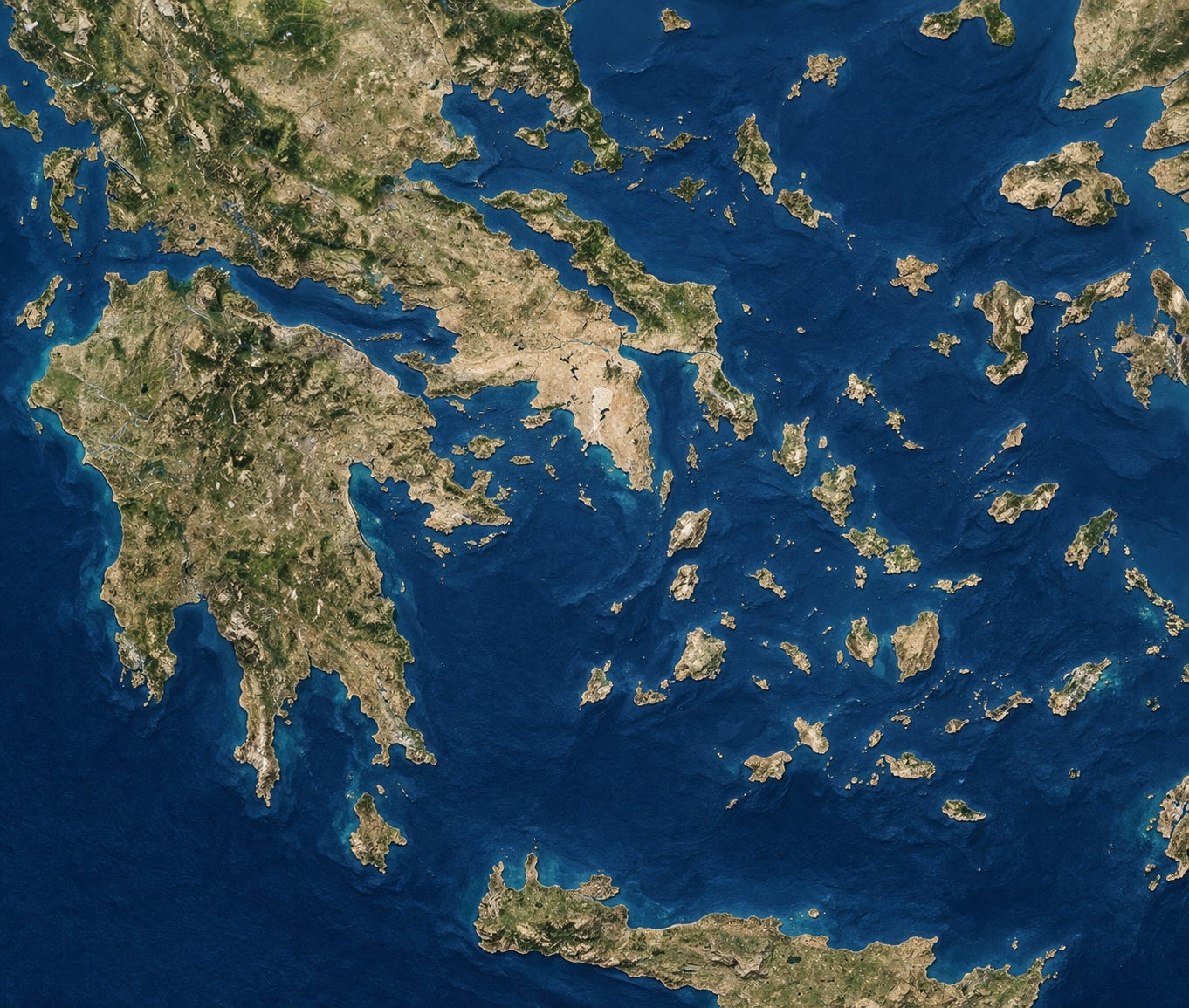
Greek geography is unlike almost any other place on Earth. Greece is an archipelago: a chain of islands. The rocky, mountainous terrain made it difficult for a single kingdom to dominate a wide geographic area. Instead, Greek civilization took the form of dozens of small, independent city-states.
Geography was decisively important for the city most people consider the birthplace of Western civilization: Athens. Athens was a coastal city and developed into a naval empire. Its naval power was based on the trireme, the most maneuverable vessel of its time. The trireme attacked by ramming: it would approach an enemy ship at full speed and pierce its hull with a bronze ram. The effectiveness of the trireme depended on fielding a crew of skilled rowers. The rowers needed to be able to row in synchrony, and execute complex maneuvers, such as reversing direction after an enemy was rammed.
Trireme rowers were recruited from the lowest class of Greek society - the thetes. This form of service was attractive to the lower classes because it paid decently well, and it did not require an expensive suit of armor, like the hoplite warriors. Since the rowers had to be skilled and motivated, military leaders preferred not to use slaves. Thus Athenian military power depended on a strong social contract between the upper and lower classes, and this was a major factor in the birth of democracy.
While Athens created a naval empire, and its rival Sparta created a land empire, in general the geography of Greece prevented any one city from dominating the entire region. Greek history is replete with the names of once-glorious cities: Corinth, Thebes, Rhodes, Argos, Syracuse, and many others. The city-states were highly independent, pursuing a variety of forms of political and economic organization.
The story of Greece, where small dynamic nations struggled endlessly for dominance, and geography prevented one nation from achieving long-term hegemony, also played out on a larger scale in Europe, for basically the same reasons. European geography is much more complex and varied than most other parts of the world, with many peninsulas, mountain ranges, and islands:
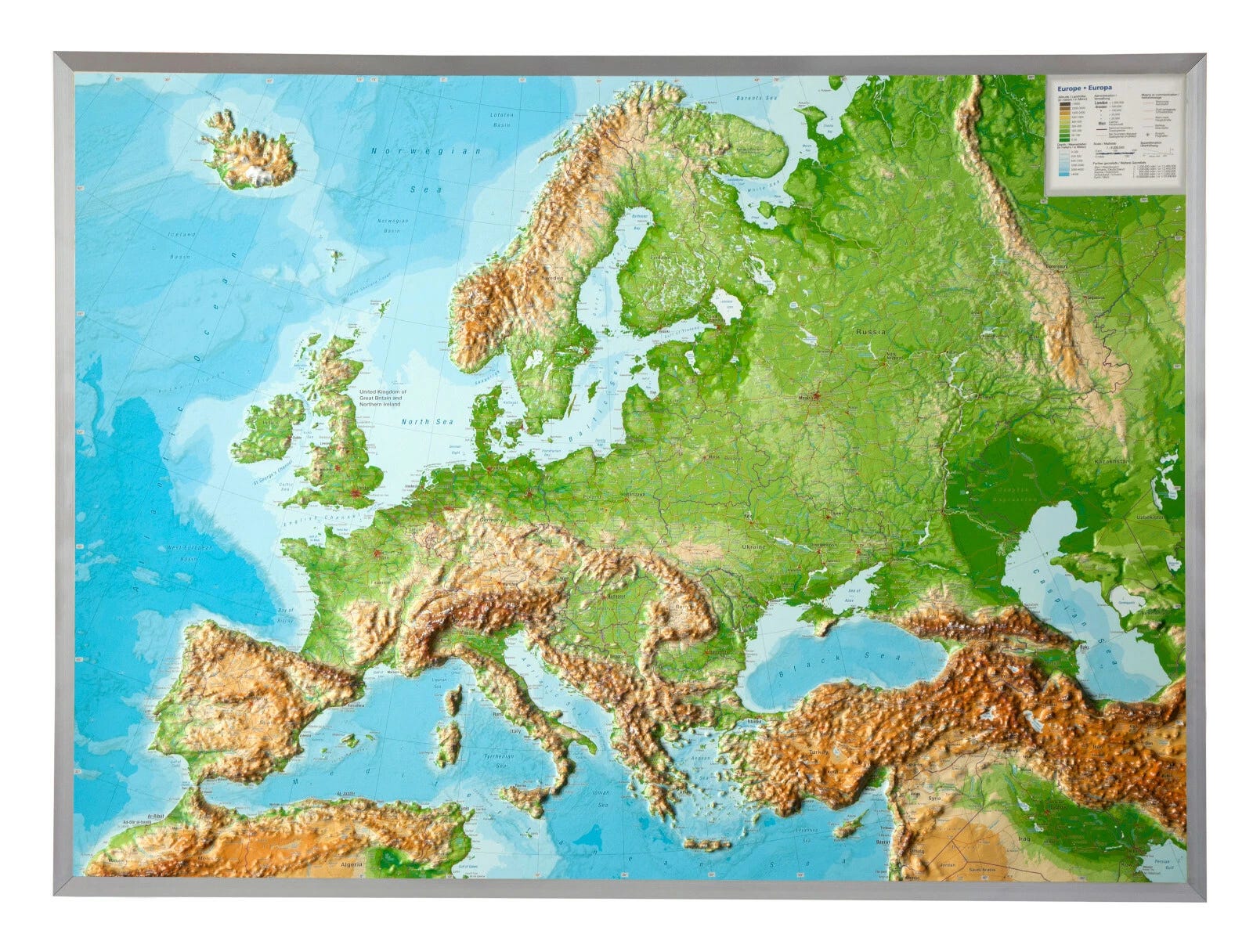
An alien viewing this map might be able to predict the rough boundaries of European nations. Italy and Spain both enjoy peninsular regions guarded by mountain ranges. The British isles are quite distinct from the mainland. There is a pocket of territory enclosed within mountain ranges that roughly corresponds to the Austro-Hungarian empire. The alien might also predict conflict along the Great European Plain, the wide, flat corridor connecting France to Russia, which has obligingly served as an invasion route for Napoleon, Hitler, Stalin and several others.
III
Geography played an important role in European history, but this role reinforced and supported another trait that has been handed down from nation to nation in the history of the West: a spirit of defiance and revolution.
At the most basic level, Western history is the study of revolutions. The American Founding Fathers rose up against British rule and created a democracy in the New World. The French revolution overturned the monarchy, then elected an Emperor and marched their armies across the entire continent, only turning back after arriving in Moscow. The Russian revolution threw down the Tsar and launched the world’s first experiment in collectivist economics.
Revolution and defiance are not always forces for good. Hitler and his Nazis were certainly motivated by the spirit of defiance, against bourgeois liberal democracy to the west and communism to the east. The Protestant Reformers, after rebelling against the Catholic Church, proceeded to build theocracies (Calvin’s Geneva, Puritans in the New World) that were far more austere and repressive than the worldly, wine-drinking faith that they had replaced. The Marxist revolution in Russia led to millions of deaths in the USSR and abroad. Revolution does not reliably produce direct improvements in society. Rather, a civilization inspired by the spirit of revolution tends to achieve good indirectly, through a process of “creative destruction”, where sclerotic, stagnant states are removed in favor of dynamic, energetic ones.
History is fractal: the patterns we observe at the highest scale - such as the textbook revolutions - repeat on a smaller scale as well. European history is full of forgotten upheavals that few people have ever heard about. The Belgian Revolution of 1830, sparked by religious and linguistic differences, separated modern Belgium from the Netherlands. The Serbians revolted in the early 1800s against Ottoman rule and achieved independence by 1833; a constitution was written in 1835. The Spaniards fought a civil war between the left and the right, with victory going to Francisco Franco, who was a fascist but kept Spain out of World War 2.
Going back a bit further, the Ciompi Revolt in Florence in 1378 and the English Peasants’ Revolt of 1381 stand as examples of early proto-democratic uprisings. In the Hussite Revolution of the early 1400s, Christian reformers in central Europe rose up in the name of religious freedom and opposition to the Catholic Church; this event was a precursor to the Reformation. In the Saxon Wars of the late 8th century, Germanic tribes rebelled against the Frankish rule of Charlemagne and his imposition of Christianity. The Bagaudae uprisings in France and Spain in the 3rd and 4th centuries saw loosely organized peasant movements rising up against Roman authority, often succeeding in carving out semi-autonomous zones.
We see that there are two factors that, in combination, account for the ascent of the West. The first is material: the complex, fragmented geography of mountain ranges, peninsulas, and islands. The second is psychological: the spirit of revolutionary defiance. Together, these factors created a crucible of civilization. As this beautiful animated video shows, Europe underwent constant upheaval and dynamism for centuries. This struggle was painful, but also forced European societies to continually reinvent themselves. Any nation that remained stagnant for too long would be conquered by its neighbors. At the same time, after the fall of Rome, the geographic barriers and complexity of Europe prevented any one power from rising to control the entire continent.
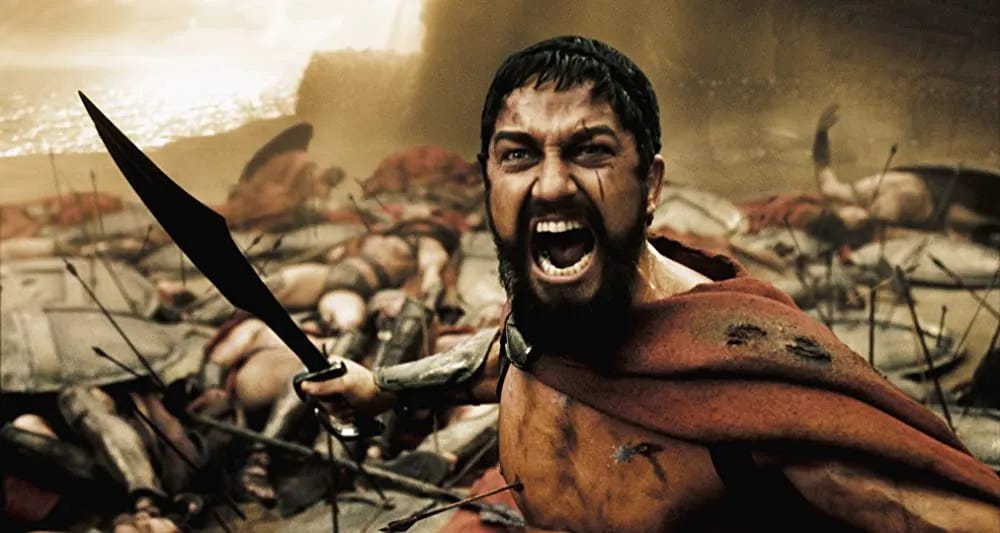
European geography was created by God and plate tectonics. But the spirit of Western defiance can be traced back to one man: Leonidas, King of Sparta. Leonidas was chosen by a coalition of Greek cities to lead an army against the invading Persians under Xerxes. The Greek army met the Persians, who vastly outnumbered them, at a mountain pass named Thermopylae. A Persian envoy approached and told Leonidas that Emperor Xerxes demanded he surrender his arms. Leonidas replied with the laconic phrase “μολὼν λαβέ” (Molṑn labé): “come and take them”. The Spartans fought to the last man, and were eventually defeated after being betrayed. However, the time they purchased with their lives was enough for the other Greeks to rally their forces and eventually repel the invasion. Leonidas’ iconic heroism and personality echo through Western history: not only did he save Greece - and thus the West - from Eastern oppression, but he left to us the great legacy of defiance that defines our civilization. So I say: Leonidas created the West.